
TB #102: Case File-A1000 Stealth Fuel Cell and Problem Outlet Filter.
On 04/01/2010, a customer contacted the Aeromotive Tech Department reporting problems with a recently installed A1000 Stealth Fuel Cell. The complaint was that, with only 2,500 miles on the system, the fuel pump became extremely noisy after 15 minutes of driving followed by rapid fluctuation of fuel pressure that would then fall to zero. Once this happened the engine quit and could not be started or driven for 30 minutes or more.
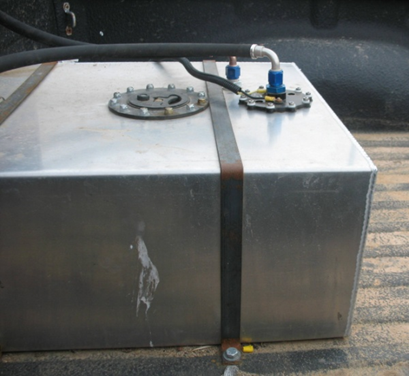
With the Stealth Fuel Cell involved, we knew the root causes of most drivability problems were in fact eliminated, namely incorrect fuel tank baffling and inlet restrictions resulting from an undersized feed line and/or improper inlet filtration (see Aeromotive Tech Bulletin #802 and #101 respectively). It was clear that the source of the problem was located elsewhere in the system.
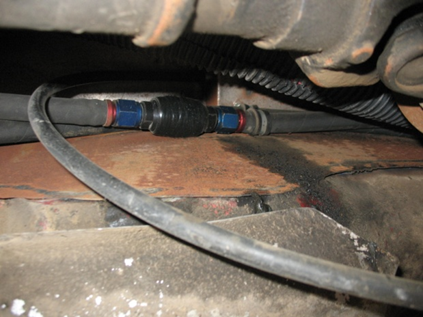
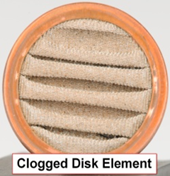
With a description of the installation and pictures of the general setup to help with trouble shooting, the problem appeared to be an off-brand fuel filter, after the pump, which in 2,500 miles had become completely clogged due to insufficient surface area. For testing purposes the element was removed from the filter housing, after which the system performed better, but still exhibited similar problems. It was determined the pump was probably damaged and an RGA as setup to get it, and the suspect filter, back here for inspection by factory technicians.

With the A1000 back at the factory, we put it on the test stand: It was immediately clear pump performance was flagging, with under-spec flow at pressure and abnormally high current draw. Upon disassembly the technician found permanent damage resulting from extended operation at extremely high pressure. We repaired the A1000 as a manufacturer’ courtesy and then reinstalled it on the test stand, where it once again performed as new.
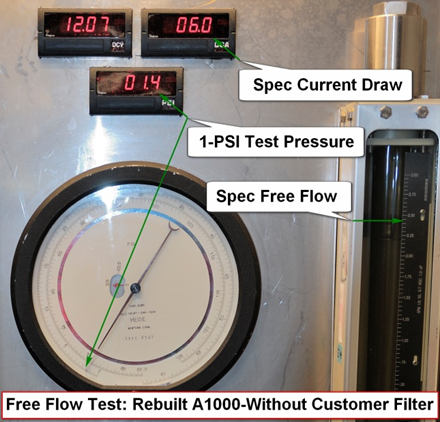
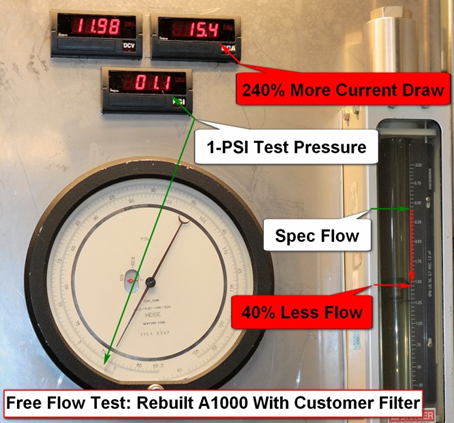
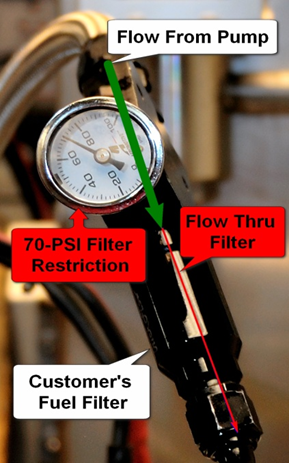
With the A1000 pump back up to snuff the customer’s filter was installed after the fuel pump, just as it had been installed on the vehicle, in order to validate our theory of what the problem was. As we suspected, fuel pump performance was immediately and significantly degraded.
In fact, the restriction created by the filter was so high that back-pressure at the pump went from under 2 PSI Free-Flow to over 70 PSI trying to push through the small, clogged filter element!
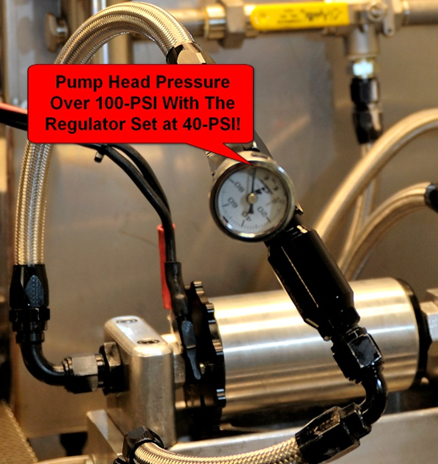
Setting the down-stream pressure up to a typical EFI level of 40 PSI brought pressure before the filter up to over 100 PSI! No wonder there was damage. Lessons learned?
A.) Install a genuine Aeromotive fuel filter after the fuel pump (See Tech Bulletin #102).
B.) Monitor filter condition, especially in new systems, to ensure the element is clean and free flowing, thus preventing drivability problems and protecting instead of harming the pump.